The Drama Club: July 2026
This month in The Drama Club: Madonna walks back into the club like she never left, Ross McElwee returns after 15 years to break your heart, the tensest TV of the summer, five albums with a point of view, and why my favorite movie of all time wears a Hawaiian shirt and a holster. Let's go →
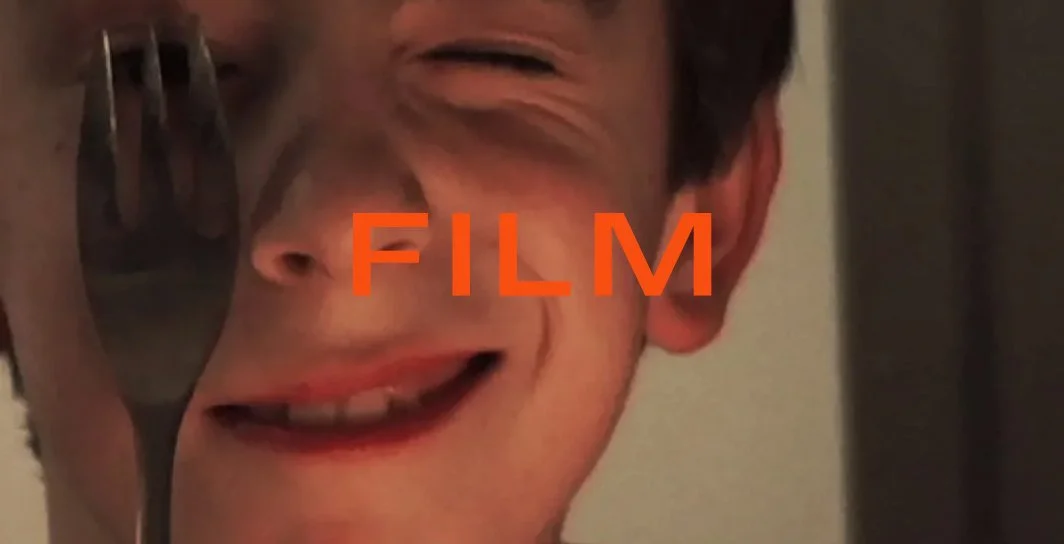
Each month, I recommend two movies: one you can watch at home and one you should head out to the theater for. At the end of this section, you’ll find a list of some releases coming this month.
It is strange to have a favorite documentary film maker. To deem a documentarian as your favorite is like saying, “this person’s view of the world is my favorite.” These days, I carry a list of vantage points I hold as my favorites, with Werner Herzog, Ross McElwee, and Wim Wenders sitting atop the list. Of the three, McElwee is most likely the most intriguing, with his ability to blend domestic familiarity into his subject matter with such ease resulting in some genuinely one of a kind film experiences. He makes documentaries that begin with the world and quietly become about himself, only to reveal that those were somehow always the same story. This month, he is releasing Remake, a film observing the director’s changing relationship to filmmaking following the death of his son and the effort to adapt his seminal 1986 documentary Sherman’s March. The film is McElwee’s first in 15 years (that film, Photographic Memory, also heavily revolves around his relationship with his son) and won the Golden Globe Impact Prize for Documentary at Venice Film Festival last year. I suspect Remake will feature the hallmarks of most of McElwee’s work, my favorite being his inability to hide himself. When you watch a McElwee film, you constantly feel him in the film with you. From his breathing to his hesitation to ask further questions to his spontaneous laughter to moments where he genuinely doesn't know what to say. All of that and more should be living at the center of Remake, which comes to theaters this Friday.
Recently, someone asked me what some of my favorite movies are. I don’t have a Letterboxd but if I did, what would my top four be? And, of course, I could write an entire essay focused on my choices but one film that I keep coming back to as a definitive answer is Baz Luhrmann’s Romeo + Juliet. Look, there are a lot of reasons for this choice. The first and foremost being Baz Luhrmann’s vision of love and all the fantasy it encompasses as an emotion deeply rooted in the human experience. In nearly all of his films, love feels like life or death and it’s never more prominent (shocker to no one) than in his rendition of the most famous love story of all time. But beyond the creative execution, Romeo + Juliet relies on two major themes not specifically present in the original text that not only elevate the source material but also make it even more accessible to modern audiences: queerness and a killer needle drop. The choice to unabashedly transform Mercutio into a fabulous gay man is inarguably the greatest choice in the film. Suddenly, the whole story becomes so much clearer, as Romeo is gallivanted around as a prized possession by his bestie who wants nothing but the best for him. But Mercutio isn't just comic relief in a sequined bra. Watch his entrance at the Capulet ball, a full drag performance of "Young Hearts Run Free," a song about escaping a love that will destroy you, and tell me he isn't the entire thesis of the movie arriving twenty minutes early. Mercutio is the first casualty of a world where love has to hide and he dies before Romeo and Juliet ever get the chance to. Luhrmann understood something no English teacher ever told us: this was always a story about forbidden love, so why not put a man who knows exactly what that costs at the center of it? Once Mercutio falls, every choice the lovers make afterward carries his weight. Which brings me to the other thing Mercutio's ball entrance proves: in this movie, the needle drop is the storytelling. Radiohead, Garbage, and The Cardigans are just the top line of a musical universe that feels so deeply rooted in the themes of the source material that the play somehow will never make sense without them. Whenever I hear “Little Star” by Stina Nordenstam, it takes me right back into the technicolor world of the movie and I feel completely entranced. And I think that's the real answer to the question. Because Romeo + Juliet isn't just a movie I love, it's a movie that taught me what I love. That maximalism is sincerity turned all the way up. That a four-hundred-year-old text can wear a Hawaiian shirt and a holster and lose none of its soul. That the right song at the right moment can say more than a monologue ever could. There's a little bit of Verona Beach in everything I do because some films you watch and others you live in forever.
More July Movies To Be Ready For:
The Invite (July 10)
Reading Lolita In Tehran (July 10)
The Odyssey (July 17)
I Want Your Sex (July 31)
Spider-Man: Brand New Day (July 31)
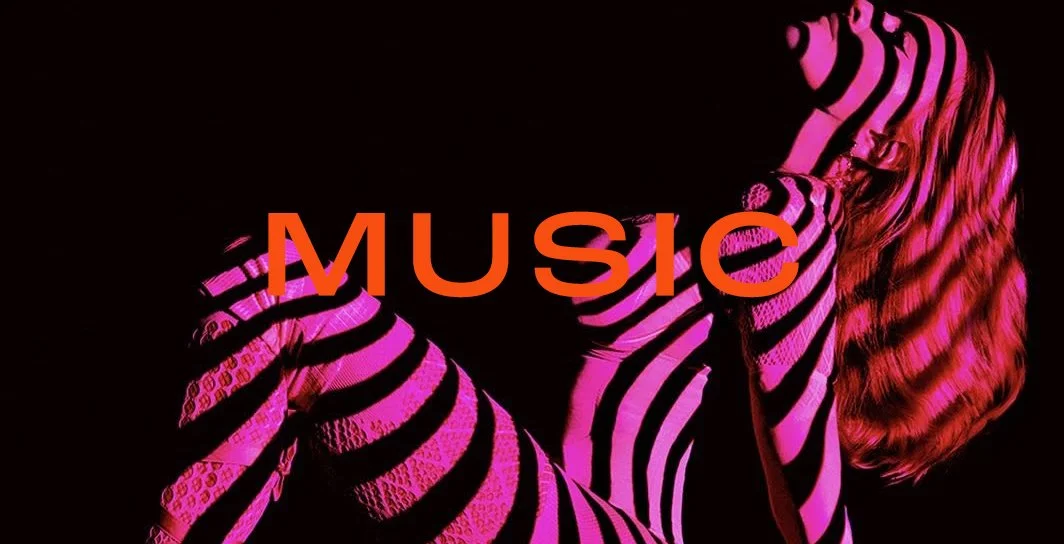
Each month, I recommend two pieces of music: something new and something I have recently returned to. At the end of this section, you’ll find a list of some releases coming this month.
Last Friday, Madonna dropped her fifteenth studio album, Confessions II. A sequel to her tremendously influential 2005 album, Confessions on a Dance Floor, the new record finds the queen of pop reunited with Stuart Price, the sonic architect of not only the original COADF but also a multitude of Madonna’s tours, including most recent Celebration Tour. I could easily give you 2,000 words on the importance of the original COADF but thankfully that is unnecessary because Confessions II is able to stand up against its predecessor with quite a bit of unique gravitas. The album was formally announced alongside the release of its first track, “I Feel So Free,” an absolute smash of an introduction back into the world Madonna so easily inhabits. “I Feel So Free” works because it operates both as an invitation and a reminder. As a listener, we’re invited into a dark nightclub alongside Madonna as she prepares to, “create a new persona,” something so deeply integral to her musical identity. Once inside the sound with her, we’re quickly reminded of the superstar’s ability to craft and maintain control over a propulsive beat. It’s been over 20 years since Madonna asserted so much creative confidence without sounding like she’s chasing a trend and it really pays off in spades across Confessions II. In what may be the highest piece of praise available for any album, let me say there are simply too many fantastic songs here to pick a favorite. At the top of my list are “Danceteria,” a French Touch imbued ode to Madonna’s life in the clubs in the 80s, “Love Without Words,” which combines a multilayered, experimental house beat with elements of acid house line and Italian disco beat to create one of the album’s most exhilarating moments, and “School,” a song quite unlike anything else a major popstar has birthed in recent memory. “School” is the album’s most intriguing song to me as it manages to take the soundscape of the original COADF and infuse it with the melodies of Erotica and confidence of Bedtime Stories to create something truly distinctive. At the end of the day, that distinctiveness is what we had hoped from Madonna for so much of her career. Now, over 40 years in, that idiosyncratic voice is back and it’s more welcomed than ever.
This weekend in Los Angeles, I am hosting the first iteration of FRUIT, a party celebrating music as a way to build community in an increasingly partitioned world of nightlife. As I have been deep diving through Soundcloud sets and YouTube remix playlists to find the perfect songs for this night, I have found a center of gravity for the party in Daft Punk's Discovery. Look, I am not going to wax poetic about Discovery for 200 words. It's Discovery. It's one of the greatest albums of all time. It is, in every sense of the phrase, essential listening. But now, under the heat of the summer of 2026, I am finding new reasons why it matters. Take "Crescendolls," my favorite Daft Punk song and a key moment of FRUIT’s setlist. Unlike so much of what is happening in capital D Dance music these days, "Crescendolls" doesn't aim to surprise or elicit a specific response. It simply roars and gets the listener on their feet for three and a half minutes of French House bliss. The fact that "Crescendolls" sits on Discovery between "Harder Better Faster Stronger," one of the band's most recognizable and electro-pop forward tracks, and "Nightvision," an ambient track that is all vibes, is exactly what Discovery is all about. The album is a journey across space and time, all the while never losing its French chic perspective. And that's precisely why Discovery feels more urgent now than it did twenty-five years ago. In a dance music landscape engineered for the drop, where sets are built like slot machines and every festival main stage sounds like a frat house with a subwoofer, Discovery insists on something radical: patience, sequence, feeling. It trusts the dance floor. It believes an album, and a night, can be a complete story rather than a series of payoffs. That's not nostalgia, that's a blueprint. And this weekend, it's the one I'm building FRUIT on.
More July Albums To Be Ready For:
Jack White - Frozen Charlotte (July 10)
Kelela - New Avatar (July 10)
Charli xcx - Music, Fashion, Film (July 24)
Nia Archives - Emotional Junglist (July 24)
Ariana Grande - petal (July 31)
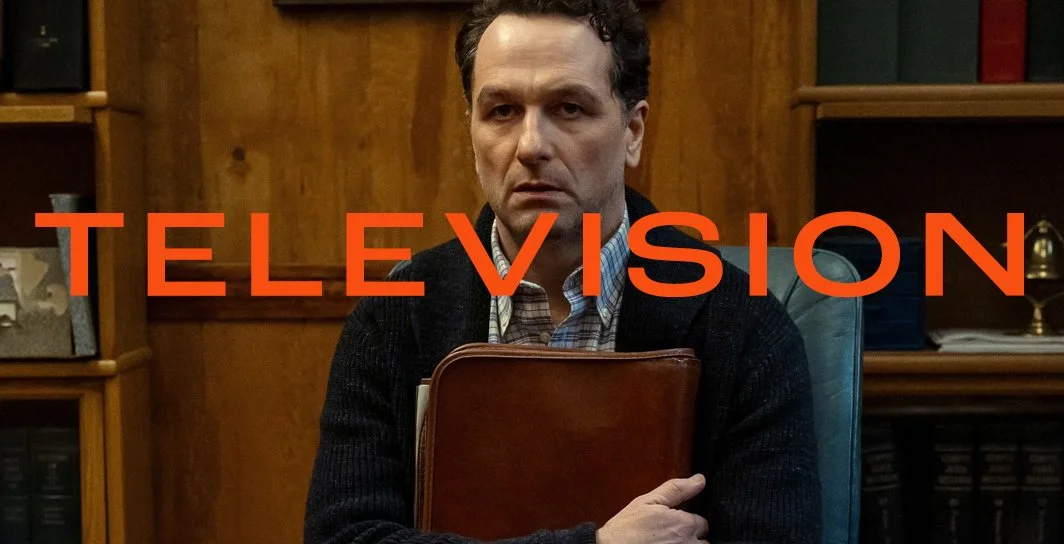
Each month, I recommend two pieces of television, which means less and less these days but for our purposes, television means anything you can stream that isn’t structured as a film. At the end of this section, you’ll find a list of some releases coming this month.
This month, I want to talk about one thing and one thing only: tense television. Not necessarily horror but something close enough that there are moments where you feel free creeping up behind you as shots tighten and music escalates. This is not usually my ideal television experience, but I do wonder if that’s more a result of the lack of great thriller television over the last decade. But now there is not one but two tense pieces of television both on Apple TV that I have completely fallen in love with.
The first is Widow’s Bay, a strange comedy that manages to also be scary. The premise is simple enough: the mayor of an island haunted by endless folklore and mythology does his best to turn it into the next Martha’s Vineyard. You can see how this is a funny show. What you don’t see is how seriously the show treats the mythology of the island. Even more interesting, what you learn while watching is how the show understands the ridiculousness of some of the myths themselves. It’s a twisted experience of laughing and then realizing you’re scared and maybe that’s why you’re laughing. The show is so deeply anchored in Matthew Rhys’s exceptional performance but the entire ensemble is doing fantastic work. Widow’s Bay is 2026’s most unique show with one of the best end of season reveals of the year, and I cannot recommend it enough.
But if you’re thinking maybe strange comedic mythology based humor isn’t going to hit, just make a few clicks inside of Apple TV and try Cape Fear. To be clear, I do not think you need to be a fan of or even remotely know the source material for this iteration of Cape Fear to entice you. Instead, focus on the absolutely stellar performance by Javier Bardem and some genuinely wonderful chaos that only actors as good as Amy Adams and Patrick Wilson (talk about an underrated horror actor) can navigate. Show much manages to happen throughout this show (so far, we still have four episodes to go) that it feels like you’re trapped in a car going 60mph towards a wall. The relentlessness alongside the performances has created a really watchable and exciting show that certainly isn’t perfect but maybe that’s the point.
More July TV To Be Ready For:
Big Brother - CBS (July 9)
Project Runway - Hulu (July 9)
The Hawk - Netflix (July 16)
FIFA World Cup Final - FOX (July 19)
Wrath - Netflix (July 29)
Each month, I dig into one cultural topic that feels unavoidable. Sometimes it’s a moment, sometimes it’s a movement, and sometimes it’s just a question I can’t stop thinking about.
More and more, all I crave is a point of view. This year, I have found myself more frequently than ever talking about how much of a difference it makes. As AI continues to seep into everything we do, all of the rough edges are being softened and uniformity is creeping into everything, especially creative outputs. So, when I come across something deeply unique with an ownable vantage point, I become incredibly invested rather quickly. With 2026 halfway over, I wanted to celebrate five albums I have loved so far this year that were built on a specific point of view and made an impact on me. I hope when you listen to them, you feel it too.
Avalan Emerson & The Charm - Written In Changes
Of all these selections, the second album by Avalon Emerson & The Charm is the most understated, which is exactly the point of view. Emerson spent a decade as one of techno's most beloved DJs, engineering euphoria for thousands of people at a time, and Written In Changes is what happens when that person decides the more radical act is writing a song for two. From the opening vocalizations of lead single "Eden," she welcomes you into a folk-alt world that feels like a walk through a field with your crush. You can practically feel your hand interlaced with the fingers of someone you have unexplainable feelings for while songs like "How Dare This Beer" and "Wooden Star" wrap their arms around you. Her club instincts never fully disappear, though. Instead, they just shrink to human scale, like on the nearly perfect "Happy Birthday," a track of electronic intimacy that shows you something new every time you press play. You could leave Written In Changes in the background and groove to it, but let it into the forefront of your brain and it has the capacity to take you somewhere beautiful where anything is possible.
Chxrry - U, Me & My Ego
Eighteen seconds into her debut album, Chxrry proclaims “Fuck a popstar, baby, I'm a cinema.” It’s the kind of “you’re kidding” lyric drop that immediately makes you ask, “who is this?” That is what a fabulous debut album is supposed to do. Throughout the next 28 minutes, Chxrry proves she is, in fact, that bitch. U, Me & My Ego is so violently unapologetic it sounds like you’re in a bedroom with someone who both wants to have sex with you and wants to make sure you know you’ll never actually get it. “Hall of Fame” is my song of the summer because it’s a victory lap for a career she's announcing in the same breath. And that's the point of view: Chxrry has taken ego, the thing women in music are endlessly punished for having, and made it the whole album. The first woman signed to The Weeknd's XO imprint isn't asking to be let into the R&B canon; she's naming the album after the third party in every one of her relationships and daring you to flinch. In a year where so much music is sanded down to be liked by everyone, here's a debut that would rather be worshipped by the right ones.
Mandy, Indiana - URGH
To attempt to describe URGH is to immediately acknowledge you’re going to undersell it. This is noise rock but it’s also rave music but it’s also blog music but it’s also deeply spooky. See, what the hell is that even supposed to mean? But sitting in the world of URGH is to feel the thrill of just how much music can do in bursts of chaos made to make you feel alive. Only once you’re wrapped in that chaos, can you consider the lyrical content. From direct threats to stories of sexual assault to dancing to stay, this album wants to remind you how expansive and destructive life can truly be. And that's the point of view: Mandy, Indiana refuse to separate the rage from the rave. Valentine Caulfield sings almost entirely in French, so most of us feel these songs before we can parse them, which means a warning to an abuser hits your body as a banger first and a reckoning second, and the band knows exactly what they're doing with that gap. Where most protest music asks you to sit still and absorb, URGH insists you move through it. It's the sound of a band looking at a world on fire and deciding the dance floor is not an escape from the crisis but a place to confront it. If the genre soup up top made no sense, that's because the point of view was never a genre. It's a posture: all hell must break loose, and you should be dancing when it does.
Slayyyter - WOR$T GIRL IN AMERICA
“I do not fuck with these bitches, no, I love America.” WOR$T GIRL IN AMERICA is a lot of things, but mostly it is deeply American. And Slayyyter doesn’t care what you think, which really is so refreshing. By the time the aforementioned lyric arrives inside of “YES GODDD,” the singer-rapper has covered hating her lover, making dick appointments, taking drugs she hasn’t been prescribed, and being abandoned by her father at a gas station. But here's the reason why this album is different: this isn't shock-value Americana, it's autobiography. Slayyyter has called the album a portrait of a woman from the Midwest, and the title itself came from her St. Louis skater friends calling each other the "worst" as a term of endearment. That's a powerful vantage point: she loves America the way you love a hometown you barely survived, from its gas stations and parking lots and vintage Chanel that's seen better days, not from a penthouse looking down at it. Where a decade of pop girls have treated trashiness as a costume to try on, Slayyyter is writing from inside it, and the difference is audible in every filthy, immaculate bloghouse inspired beat. The album even knows how the movie ends: it closes with a tribute to Brittany Murphy, the millennial patron saint of girls America chews up for our entertainment. It is a portrait of a very specific life, and that's the point of view an album like this requires in order to mean something more than just thrashing in the club.
Underscores - U
When I wrote about Underscores' exceptional album U earlier this year, I was still really getting used to it. Now, three months later, it has become the kind of album I can turn on and disappear into. Not to say it's passive, because it's not. It's technological and human, sparkly and flawed, thumpy and sad. It's undeniable. And here's the point of view, which might be the boldest on this list: April Harper Grey has said she made U for malls, airports, hotels, and supermarkets. An album written in constant transit, for the placeless in-between spaces where modern life actually happens. Consider the audacity of that. Every other artist is fighting to soundtrack your most important moments. Grey decided to soundtrack the ones nobody claims, the fluorescent-lit, escalator-humming, nowhere hours, and then smuggled the entire emotional spectrum into them. She produced the whole thing herself, nine tracks with zero filler, gliding through dubstep, future bass, and 2010s pop like someone flipping through her own memories on shuffle, and somehow it never once sounds like homage. It sounds like her. That's the trick that keeps revealing itself three months later: U takes the most anonymous, algorithm-scored spaces in American life and insists a human being is standing in them, feeling everything. Which is, when I zoom out, the whole thesis of this list. In a year when the ambient sound of the world is getting smoother, more automated, and more anonymous by the day, one of the best albums of 2026 is one woman making the anonymous spaces sing back.