The Drama Club: June 2026
This month in The Drama Club: a summer blockbuster worth leaving the house for, the case for Nelly Furtado's greatest song, why the World Cup matters even if you don't care about soccer, and an honest conversation about what Pride actually means in 2026. Let's go →
Each month, I usually share a playlist, but this month it’s a DJ set. You can read about the mix and then find the streaming link below.
Last month, I was asked to step behind a DJ booth for the first time since before the pandemic. It was an invitation I considered for all of thirty minutes before it became obvious I had to say yes. How could I not? There are few sensations like getting a room to move together. It’s almost druglike and deeply euphoric. The party (a fundraiser for a play I am producing this summer in New York) was in Williamsburg, and I knew it would be the kind of night built for my musical taste. What I didn't know was that it would reignite something inside me.
With that, I welcome you to FRUIT. Part pop, part indie dance, part French house, this is the clearest representation of where my musical taste is living right now. I wanted to blend the songs that shaped my musical education (Felix da Housecat's "Silver Screen Shower Scene" and Goldfrapp's "Ride A White Horse"), the songs that have become pillars of my musical identity (Lady Gaga's "Free Woman" and Bob Sinclar & Thomas Bangalter's "Gym Tonic"), and the songs currently occupying the most real estate in my headphones (Madonna's "I Feel So Free" and Jamie xx's "Life"). The result lives at the intersection of Paris house, a Milan fashion party, a New York queer dancefloor, and a sunset turning into sweat. Sounds like me, huh?
This is the first of many new DJ mixes that will be coming your way. Meet me on the dancefloor.
Each month, I recommend two movies: one you can watch at home and one you should head out to the theater for. At the end of this section, you’ll find a list of some releases coming this month.
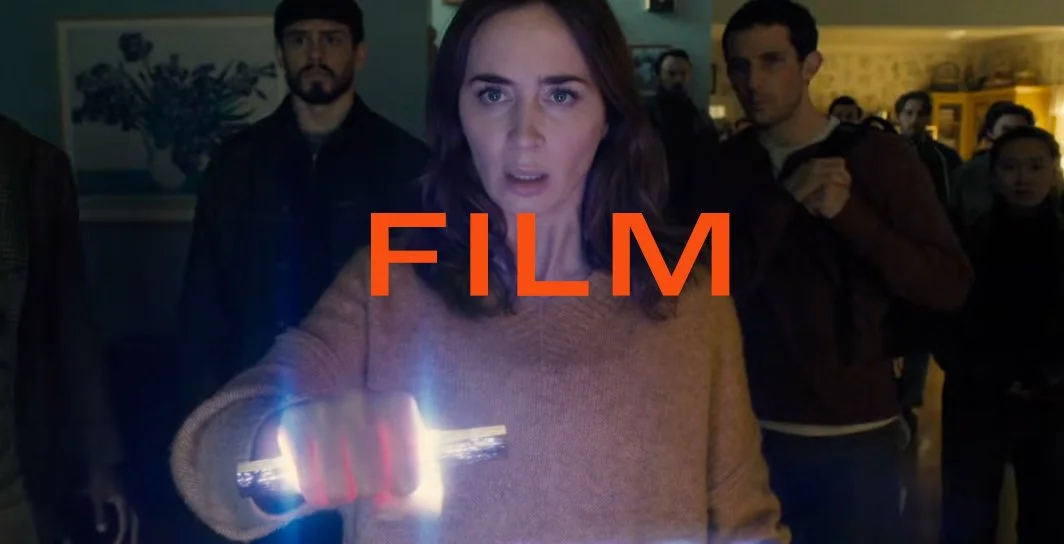
Growing up, I distinctly remember watching Minority Report for the first time and having my brain completely blown open. Spielberg’s direction and the film’s dystopian aesthetics created a world so distinctly different yet feasible, I both wanted to transport myself there and hoped it would never become our reality. The film’s enrapturing opening sequence is still my favorite science fiction film opener and that’s testament to Spielberg’s ability to create layered, dreamlike imagery that walks the line of romance and dystopia so elegantly. Now, nearly 25 years later, Spielberg is back creating science fiction. This Friday, Disclosure Day is coming to theaters. At its most obvious, the film seems to be an alien doomsday odyssey but buried deep beneath that appears to be a film about government conspiracies and whistleblowers. If there is a legacy director I trust with both aliens and government corruption, Spielberg is at the top of the list. On top of that, two of my favorite actors, Emily Blunt and Josh O’Connor, are starring in the film and the music of John Williams will be nestled underneath all the drama. This is the summer blockbuster to be excited about and you should buy your tickets now to go see it this weekend.
In theater, we love two-handers. A two-hander is a production with only actors. This sort of thing rarely exists in film but when it does it is often incredibly special. Last year’s Peter Hugar’s Day was a thought-provoking two-hander but did fall into the trap of most films in the genre: it was very talky. This works in theater because, well, there’s not much else to do on stage but talk. In film, there are other tools and tricks that can be deployed. This year, Jim Rash has given his best attempt at a two-hander with Miss You, Love You, which premiered at the end of last month. Allison Janney and Andrew Rannels play an unlikely character pair: a mother and her estranged son’s assistant. They meet at the funeral of Janney’s husband and a film about grief and family ensues. There are a few other players in the film, but mostly this is Janney and Rannells’ show, each of them flexing their chops to showcase a story without much pomp and circumstance. At times, the film does strain and you can feel the ideas pushing up against the screen, resulting in moments where you may cringe, but the concept and performances are strong enough to withstand the tropes of a two-hander. Miss You, Love You is now streaming on HBOMax.
More June Movies To Be Ready For:
Scary Movie 6 (Out Now)
Stop! That! Train! (June 12)
Toy Story 5 (June 19)
Girls Like Girls (June 19)
Super Girl (June 26)
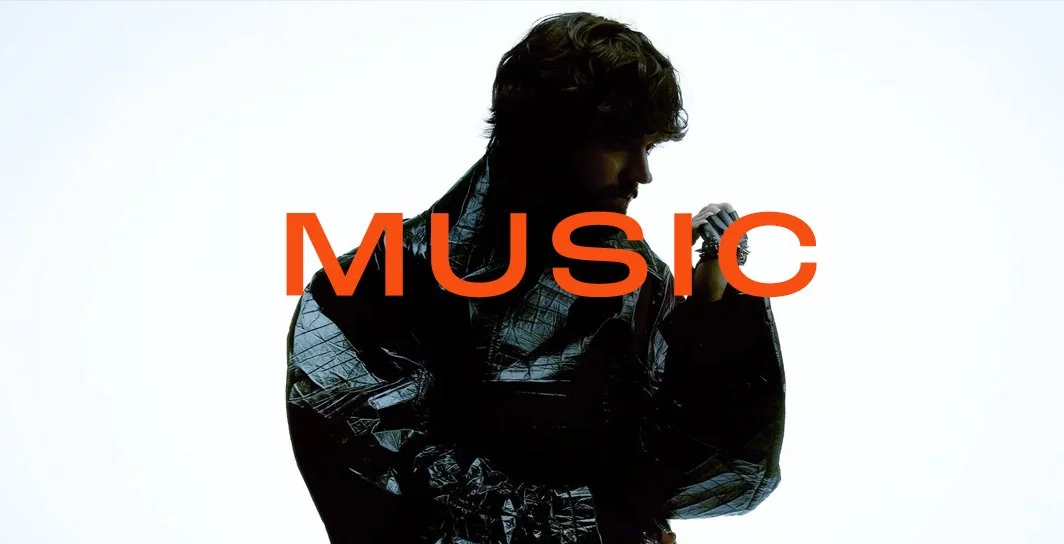
Each month, I recommend two pieces of music: something new and something I have recently returned to. At the end of this section, you’ll find a list of some releases coming this month.
When Lady Gaga dropped Artpop in 2013, there was one name in the production credits I was unfamiliar with. Sitting alongside Zedd, DJ White Shadow, Infected Mushroom, will.i.am and Rick Rubin was Hugo Leclercq, a then 19 year old producer from France who had put out a few singles under the moniker Madeon. Now, 13 years later, Madeon is a well known name in the world of French pop, with 2015’s Adventure skyrocketing him into the dance-pop stratosphere. After Adventure, Leclercq went on tour with Porter Robinson, released a second album and produced for Lady Gaga again on 2020’s Chromatica. In April, we absolutely tore down the house at Coachella with a 75 minute set dedicated to French house. This month, he’s returning with his first album of the decade, Victory. When I tell you that first single “Hi!” is the kind of song that would’ve gone triple-platinum in a car commercial in 2006, I mean that with my whole chest. It is infectious, danceable and features a guitar riff that calls back to The Hives. Guitar infused dance music is having a real moment in 2026 (everyone say thank you Slayyyter) and Victory is looking to keep that streak alive. Get in the car, turn it up, and sing loudly while driving down the freeway. Yes, that’s the vibe Madeon brings to the party.
The members of my music think-tank will tell you my style of music fandom deeply values two things: anniversaries and lists. This month, an album that was exceptionally formative for me is turning twenty years old: Loose by Nelly Furtado. Produced by Timbaland (operating at the height of his powers) and his protege Danja, Loose was a complete reinvention for Furtado, shifting her focus away from folk-pop to sprawling pop built for clubs, cars and everywhere in-between. I remember hearing the album’s first single, the Spanish club reggaeton smash “No Hay Igual,” and immediately being prescient about how Nelly Furtado was about to become an absolute sensation. And twenty years ago, an album cycle could last years, meaning Furtado’s Loose-era domination lasted nearly two years. After “No Hay Igual” came the back to back hits of “Promiscuous” and “Maneater,” two songs that even today could get an entire room to the dancefloor within seconds. While a lot of retrospective reviews are likely to focus on “Promiscuous,” I am here to tell you “Maneater” is the superior song. Whereas “Promiscuous” relies on the back and forth of the vocal delivery, “Maneater” features an absolute stomper of a beat, a hook that features chanting, singing and harmonies, a final stretch dance breakdown, and the kind of feral energy the 2000s popscene was desperate for. Simply, “Maneater” is a perfect song. But after those songs, Furtado wasn’t even close to being done. Five months later, she released “Say It Right.” Thinking about “Say It Right,” it’s hard to actually tell you what it sounds like. It features Timbaland’s signature beats but it also has techno synthesizers, a spooky keyboard, and lush harmonies that mirror the styles utilized on Madonna’s Ray of Light. All of those elements together fester to create an absolute earworm that you can find yourself looping over and over again. Even now, twenty years later, does anything sound like “Say It Right”? That’s the magic of Loose and you can hear its ubiquity in album tracks like “Afraid” (which received a killer flip from Four Tet in 2019). It’s an album so many artists try to recreate for years to come but no one has ever come close.
More June Albums To Be Ready For:
Vince Staplеs - Cry Baby (Out Now)
Baauer – U (June 12)
Kelsey Lu – So Help Me God (June 12)
Olivia Rodrigo - you seem pretty sad for a girl so in love (June 12)
Pond – Terrestrials (June 19)
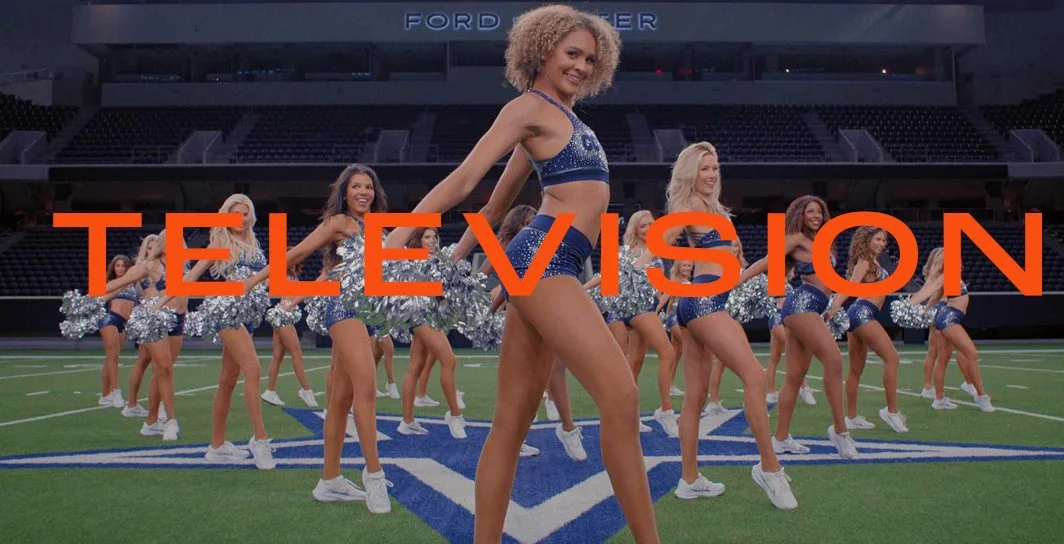
Each month, I recommend two pieces of television, which means less and less these days but for our purposes, television means anything you can stream that isn’t structured as a film. At the end of this section, you’ll find a list of some releases coming this month.
Very rarely will I recommend you watch reality TV. I have never been an avid consumer of reality programming but every once in a while, there will be a show that simply hits. This month, one of those shows is returning to our screens. You may have probably guessed it’s America's Sweethearts: Dallas Cowboys Cheerleaders. The show is returning for its third season and let me tell you, I am absolutely pumped. On paper, the show comes off like something you think you’d understand and get bored of rather quickly, but in reality this is a show with some of reality TV’s most dynamic and interesting characters. We’ve now only spent two NFL seasons with these women, who are wonderfully portrayed as the three dimension superstars that they are through the eyes of the show’s creator Greg Whiteley. At the show’s core is, of course, the disparity of the public view and the truth of what being a NFL cheerleader really is and over the course of each season we watch as these women prove themselves to be some of professional sports’ least valued stars. America's Sweethearts: Dallas Cowboys Cheerleaders is, at nearly every turn, a sports show. The sport is dance and cheer but it is still a show that comes to life within the world of sports in such a way that any NFL fan will find themselves immediately immersed. Tune in when the season drops on Netflix on June 16.
It's quite a contentious time to be having the world's largest soccer tournament on North American soil, but the World Cup is kicking off this week. The World Cup happens every four years, which means it's one of the few things left that actually stops the world at the same time. This one is bigger than any before it (48 teams, 3 host countries, 104 matches), but the size isn't really the point. The point is that billions of people who don't watch soccer for the other three years and eleven months are about to make it their entire personality. This is going to happen because their country is in it, their family cares, and, most importantly, because it's going to be on everywhere. With teams gathering from all over the world, it means we’re about to witness nationalism, gender politics, and sports fandom collide in front of our eyes nearly every day for a month. Some topline for those catching up: Italy didn't qualify, Iran's participation has become a geopolitical flashpoint, and the US beat Germany in the pre-tournament friendly. And it’s all happening in the US while visa restrictions are making it harder for some fans to even get here. None of that disappears when the whistle blows, it just plays out on a bigger stage. Soccer is the world's most popular sport, and this is its biggest moment. Whatever your relationship to the game, something worth watching is about to happen.
More June TV To Be Ready For:
Below Deck Mediterranean - Bravo (June 8)
The Listeners - STARZ (June 12)
The Season - Hulu (June 17)
I Will Find You - Netflix (June 18)
House of the Dragon - HBO (June 21)
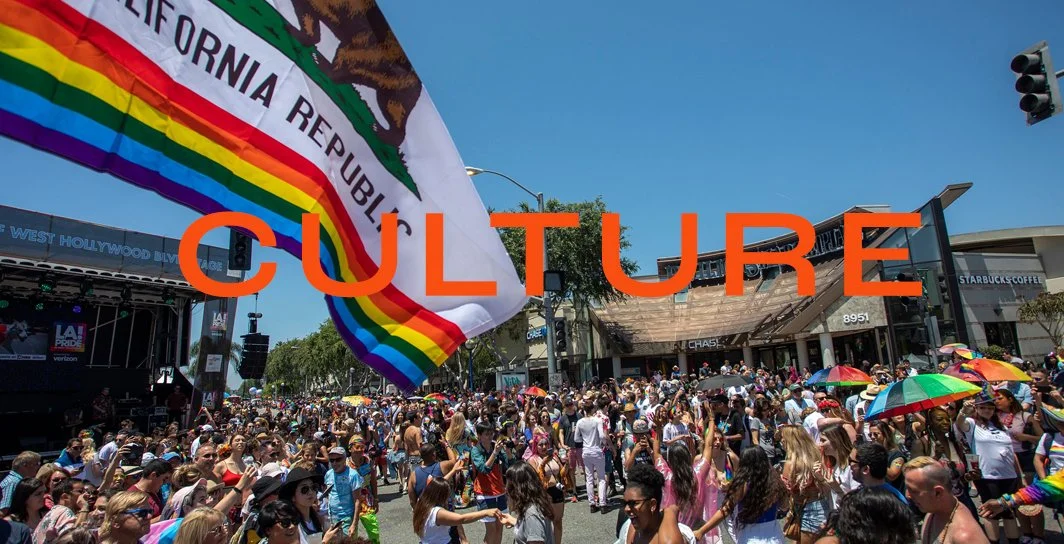
Each month, I dig into one cultural topic that feels unavoidable. Sometimes it’s a moment, sometimes it’s a movement, and sometimes it’s just a question I can’t stop thinking about.
There have been a few gay gasps recently as I have told people I am skipping Pride festivities this year. Historically, this is very unlike me. That’s not to say I have been the type of homosexual who wears a speedo and dances on a Chase Bank branded float down Santa Monica Boulevard for the WeHo Pride Parade, but I sit on the board of a LGBTQ+ organization, have a reputation of championing queer rights in the workplace, and serve as the resident gay person in multiple heteromaxxed friendship circles who rely on me when it’s time to better understand “the culture.” Pride has always been a time where I have raised the flag, shouted into megaphones, and taken up space. It has also been a time of very enthusiastic annual hedonism. You know the drill: no sleep, bus, club, another club, another club, plane, next place, no sleep, no fear. But as the calendar flipped and the rainbow brand logos emerged, I have found myself standing in a corner and thinking about how the queer community is in a cultural recession. Not from mainstream culture, but from itself.
This downturn is fueled by one truth: we aren’t drinking like we used to. When I stopped drinking last year, I realized very quickly I was not alone. The overall US drinking rate hit a historic low in 2025, down 13% from 2022 to the lowest recorded number in nearly 90 years. When I looked at younger generations, the picture got even more dire. Gen Z drinks roughly 20% less per capita than Millennials and Boomers, and about half of Gen Zers over 21 have never had a drink at all. This isn’t just a statistic, this is a way of life. And even if queer Gen Z folks tend to drink more than heterosexual Gen Z (there is no data here, unfortunately), it is most certainly not hitting the peaks of the Millennial generation.
But those stats signal something much more severe. Although some may see them and think that’s the story, the real cultural shift is the fact that no one is drinking together anymore. The average time Americans spent with friends in person has plummeted in the last 20 years, from 30 hours a month in 2003 to 10 hours a month in 2020. And that’s the scariest truth: we didn't stop just drinking, we stopped showing up. This may be because we’re now swiping on our phones rather than cheersing glasses at our neighborhood bar. Dating apps are a multi-billion dollar industry and, guess what, they don’t want us to find love. It is a business, after all. The gamification of finding a partner has resulted in endless swiping and unanswered taps. For the gay community, Grindr has become synonymous with the dating scene but what has it brought us? Cruising culture may never die but it also is draining our desire for an actual crush. And that’s the scarier part of what’s happened in the last fifteen years. We stopped drinking, yes, but we also stopped catching each other’s eyes from across the bar. And in a queer culture where we’re just looking at torsos on our phones while we lay on the couch, what does our culture actually represent?
And so, what is Pride in 2026? The bars are quieter. The apps have replaced the darkroom. The corporations have claimed the parade. And the generation coming up behind us, the one that is 20% queer-identifying, is staying home and scrolling past each other. The difficult truth is that we have been celebrating Pride the same way for decades. The float, the festival, the frenzy. For a long time, that made sense because visibility was survival and being loud in public was a political act. But somewhere along the way, the revolution became a routine, the protest became a party, and then the party got sponsored.
Trust me, I am not saying hedonism is wrong. I am saying it was a response to a specific moment, and that moment has evolved. The rights of the most marginalized members of our community are still deeply under attack. Trans kids are being legislated out of the closet. Queer spaces are closing. And we are marking all of it with a brand activation and a DJ set on a flatbed truck. Pride needs a new definition. Not a rebrand, but a reckoning. That is why I am skipping the festivities this year. Not because I have lost faith in the community. But because I haven't.