The Drama Club: Coachella 2026
Today in The Drama Club: 122,086 steps, gay guy music video night, and everything that happened at Coachella's 25th year. Let's go →
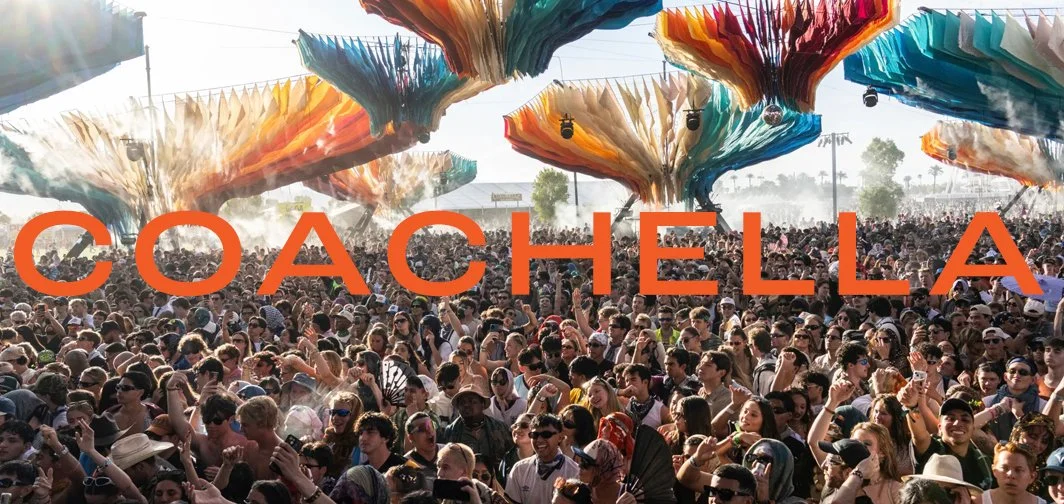
This weekend, I attended my 12th Coachella Valley Music and Arts Festival. I walked 66.52 miles, saw 31 bands, ate five slices of Spicy Pie. 2026 marked the 25th edition of a festival that began in 1999 as a two-day event headlined by Beck, Tool and Rage Against The Machine. It has since grown into something that hosts 250,000 people over two weekends in the California desert. I was one of the 125,000 there for weekend one. Here's what happened.
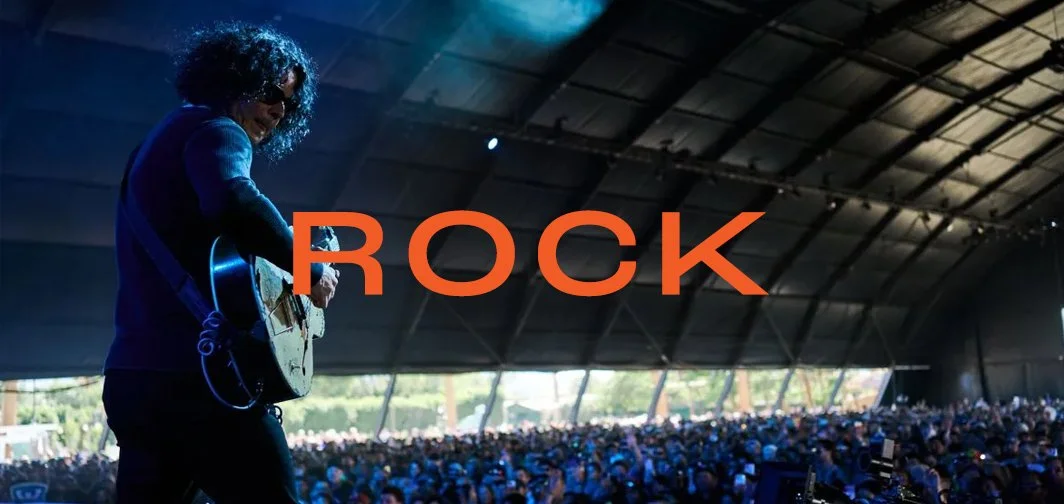
On Friday night, I watched two men run into each other at full speed. As they did, Baltimore-based hardcore punk band Turnstile shredded their way through “DULL,” an album cut from their 2025 album Never Enough. The two men were a part of one of many moshpits that were overtaking the Outdoor Theater a little after 8pm. Although Coachella did start as a more rock focused festival in 1999, over the last decade it has transitioned into a more dance and rap focused event. The rap has faded away, making room for bands like Turnstile to bring the rock energy back to the festival. It may be Coachella’s 25th year, but rock is very much still on the menu.
The rock and roll continued on Saturday, where Jack White’s surprise late-addition set in the Mojave Tent welcomed crowds very early to the fields for a set that was highlighted by tracks from his White Stripes catalog as well as his solo career and his band The Racounteurs. Jack White was not originally on the Coachella lineup but ever since the pandemic, Coachella organizers have been adding huge names to the festival in the final week as a surprise to tempt fans into the festival earlier than usual. Last time Jack White was at Coachella, he headlined. This time, it was barely even 4pm as White played the iconic opening notes of “Seven Nation Army,” one of the most instantly recognizable rock songs of the 21st century. The crowd was electric, dense and eager to see the newly minted Rock & Roll Hall of Famer, which was exactly the point of adding him to the festival. His set proved that even in 2026, fans will show up early for a rock icon.
Throughout the rest of the festival, rock bands continued to fill stages. As the sun set on Saturday, Sombr welcomed Smashing Pumpkins’ Billy Corgan to a Coachella stage for the very first time to perform his 1996 hit “1979.” Foster The People’s Sunday set amassed a crowd of nearly 30,000 people, all of whom blissfully took part in one of the weekend’s best singalongs for the band's breakthrough hit “Pumped Up Kicks.” Wet Leg brought their brand of UK indie rock to the Main Stage on Sunday with some absolutely debaucherous energy which the audience gave right back. On Saturday, indie breakouts Geese had a crowd spilling out every entrance of the Gobi Tent for one of the weekend’s most anticipated sets while clips of the Knicks played in their intro video. Walking across the fields, guitars were heard in nearly every direction. On Friday night while walking to see a DJ set, I heard The Strokes’ Julian Casablancas shout “Oh, you wanna see Justin Bieber?! Well, too bad, because we’re The Strokes!” I was grateful to hear that followed by very loud cheers.
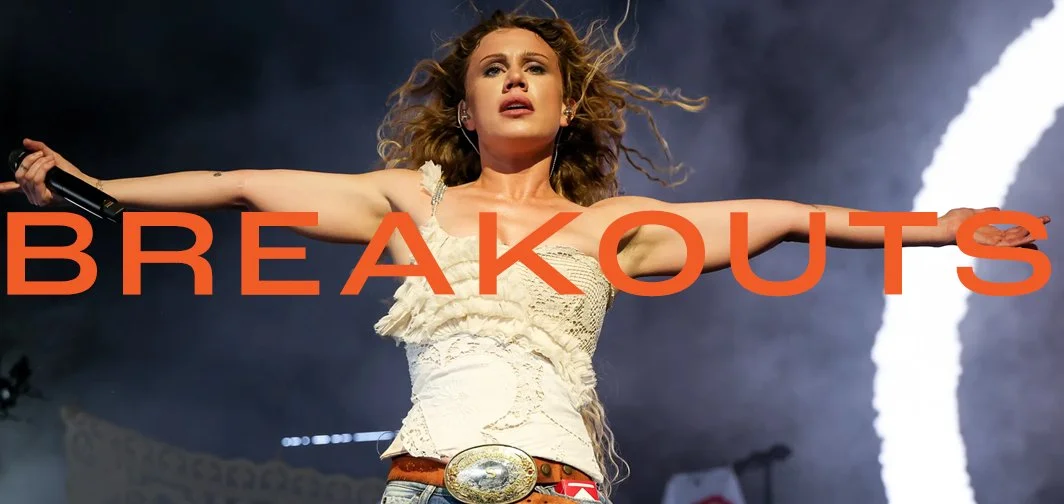
On Friday at 3pm, the Mojave Tent was pulsating. As the heat trickled in through the sides of the tent, so did eager fans awaiting to see the first live performance by St. Louis singer, songwriter, and rapper Slayyyter since the release of her critically acclaimed album WOR$T GIRL IN AMERICA. An enormous crowd roared as the opening drums of “DANCE…” kicked in and Slayyyter walked on stage. What took place over the next 45 minutes was what you come to Coachella for: a star-making set. Throughout her debut Coachella performance, Slayyyter proved both that her new album is one of the year’s best and that she is the next big thing in pop. WOR$T GIRL’s blend of bloghouse and synthpop was a perfect soundscape for Coachella and Slayyyter never shied away from owning the spotlight. By the time she performed “CRANK”, everyone in the tent knew they were witnessing something spectacular.
Six hours later, the same energy overtook the indoor Sonora Stage as breakout Australian EDM producer and DJ Ninajirachi welcomed Porter Robinson to the stage to premiere a new song. Nina’s set was the perfect storm of endless internet hype, an album that found its way onto nearly every 2025 end of year list, and a Coachella crowd ready to let loose. Although at one of the festival’s smallest stages, Nina made it feel like she was performing for a crowd of tens of thousands, with songs like “Fuck My Computer” and “iPod Touch” proving she easily could’ve played in the festival’s famed Sahara Tent. By the time Porter Robinson showed up to premiere “i WannaCry,” there was no way Nina’s set wasn’t going to be one of the best of the weekend. After the premiere, she continued to soar and left everyone drenched in sweat and euphoria.
A little over 24 hours later, I found myself unable to get into the Mojave Tent. There were ten minutes before PinkPantheress was set to go on and every entrance was packed. When she performed “Stars,” the crowd began to dance and I found a gap and slipped in. Pink easily drew the Mojave's largest crowd of the weekend and could've been on the Main Stage instead of Addison Rae and held her own. But none of that mattered at nearly 10pm on Saturday when "Illegal" hit. The crowd had been going for two hot days. We needed something. “Illegal” went straight into our veins and brought the whole tent back to life. By the end, PinkPantheress had earned every person in that room.
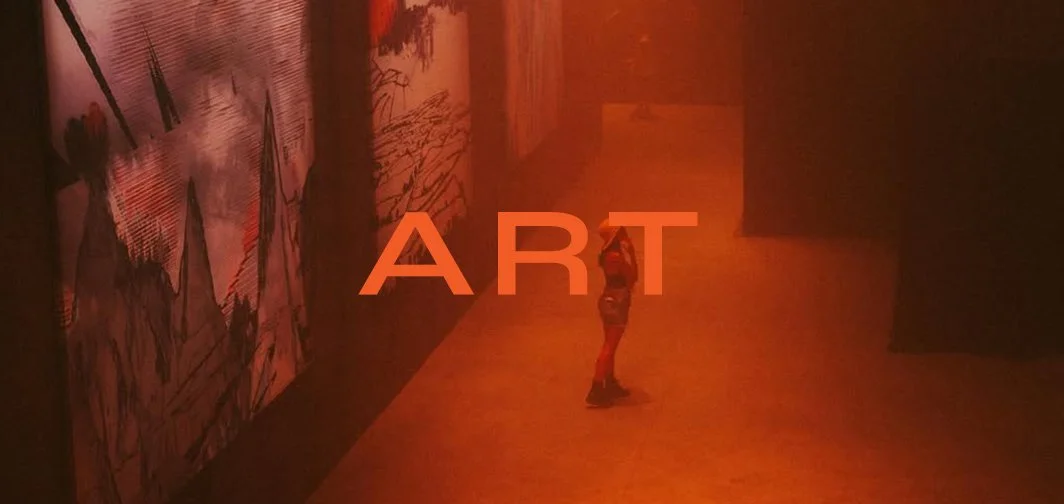
On Saturday afternoon, I found myself three stories underground. Buried between The Do Lab and the Sahara Tent was Radiohead’s Kid A Mnesia Bunker, a brand new motion picture house and art installation celebrating the band’s iconic 2000 and 2001 albums Kid A and Amnesiac. The installation was the first physical iteration of a 2021 walking simulator published by Epic Games, and will be traveling to Brooklyn, Chicago, Mexico City and San Francisco over the course of the next year. Throughout the weekend, fans lined up to be guided out of the desert sun down into a concrete abyss adorned with sketches, posters and sculptures referencing the band’s seminal works. The bunker was cold, dimly lit and soundtracked by the eerie tones Radiohead has pioneered over their 40 year career. I have never experienced anything like it at Coachella, let alone another music festival. The custom built bunker felt like something out of a dystopian film and was highly attended throughout the weekend, with lines to enter on Friday reaching peaks of hundreds of people at a time.
In the center of the Kid A Mnesia bunker was a 360° theater playing a 75-minute film built out of the world of the sister albums. Coachella attendees sat against walls, laid across the floor and took a load off on custom built furniture to watch the film for as long or as little as they wanted, with band leader Thom Yorke’s voice echoing through the cavernous halls of the bunker. The film itself was what you’d expect from Radiohead: a purposefully bleak reminder of the coldness of the world outside of Coachella’s sun-kissed joy. Most people forget Coachella is officially billed as a music and arts festival. The bunker is proof maybe Coachella does still know a thing or two about art.
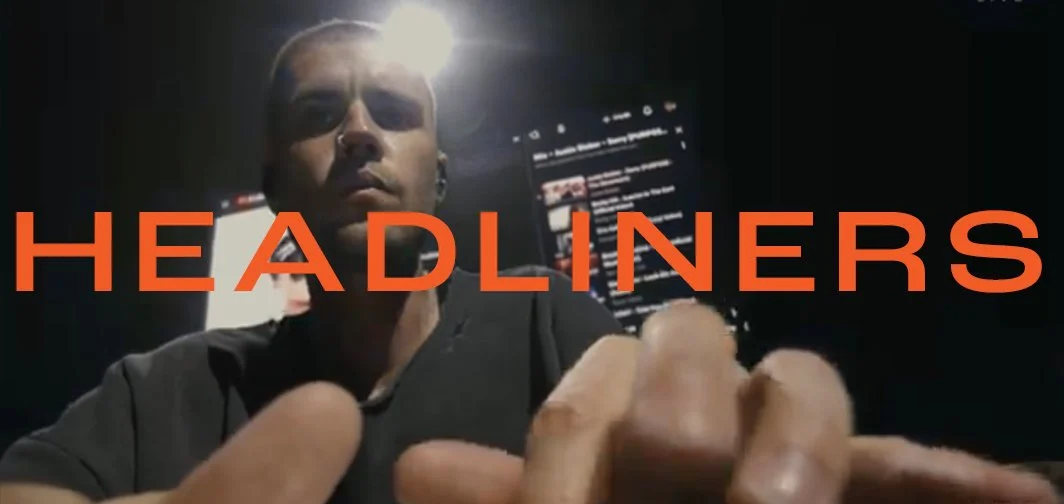
At some point there will have to be a tremendous discourse around Coachella booking uber famous men who hate being in the spotlight to headline. Similar to Frank Ocean’s doomed 2023 set, Justin Bieber’s headlining moment on Saturday night was as strange as it was frustrating. By the time I walked over from my previous set, Justin was sitting at a desk pulling up YouTube videos. Yes, he was sitting at a literal desk. Yes, YouTube was being broadcast on the 100’ long screen behind him. Yes, over 100,000 people were in a YouTube Spiral with Justin Bieber on Saturday night at Coachella. As he sat at the desk and sang along to hits, however, the audience around me was lapping it up. Saturday’s crowd was noticeably larger than both other days at the festival and at least 20% of the audience that day was adorned in some sort of Bieber attire. It was his festival that day and even with the limited energy exerted and YouTube singalongs, the Beliebers seemed thoroughly entertained. I, however, walked away to go dance somewhere with people who didn’t come to experience the weirdest gay guy music video night to ever exist.
This was the first year I have attended Coachella and not been deeply invested in a single headliner. Friday’s back to back of Sabrina Carpenter and Italian-American electronic music producer and multidisciplinary artist Anyma was particularly not my cup of tea. As I walked by Sabrina’s set on my way to see a very underwhelming set from Disclosure, I was impressed by her stage design and high energy antics. Her music has its audience, which may not exactly have fit the Coachella demographic from 10 years ago but it would appear to be very on-brand now. All that to say, the crowd was sprawling. It’s exactly what you want for a Friday night headliner: to set the stage and deliver. This would become even more important a few hours later when it was announced Anyma would not be closing the night due to strong winds. Walking back to my car amongst the severely disappointed Anyma fans, I was scrolling social media and learned about Sabrina’s response to a fan performing a Zaghrouta, a traditional high-pitched celebratory trill common in Middle Eastern and North African cultures, during a quiet moment of her set. Seemingly unfamiliar with the sound (which Shakira performed at the Super Bowl in 2019), Carpenter called the cheer "weird.” And then she moved on like it was nothing. Ever since, the video has been scrubbed from rebroadcasts of Carpenter’s set and she made a lackluster statement saying, “My reaction was pure confusion, sarcasm and not ill intended. Could have handled it better!” That’s the truth.
Sunday night, Karol G delivered. Although a half-hour late, which is uncommon for Coachella on Sunday night given the noise ordinance, when Karol emerged she was met with a warm welcome from the Coachella crowd, who were thrilled to see a Latina woman headline the festival for the first time. The performance was entirely sung in Spanish and Karol made no attempt to cater to an English speaking audience, only really speaking in English once or twice throughout the set. Although this may read negatively, it was an earned moment of Latin pride on one of the world’s largest festival stages. At the end of her high-energy and heavy production performance, Karol took a moment to speak in English to the audience about her motivations and desires for her performance. “We do this because we want everyone to feel welcomed to our culture, to our roots, to our music. So, I just want everyone to be proud of where you come from, please. Don’t feel fear. Feel pride. Raise your flag!” She then wrapped her set with the Tiësto remix of “Provenza,” which closed the festival with a stunning moment that proved Karol understood not only her assignment as the first female Latina headliner but also as a headliner of a festival responsible for bringing dance music onto the world stage and made space for the litany of EDM festivals in the culture today.
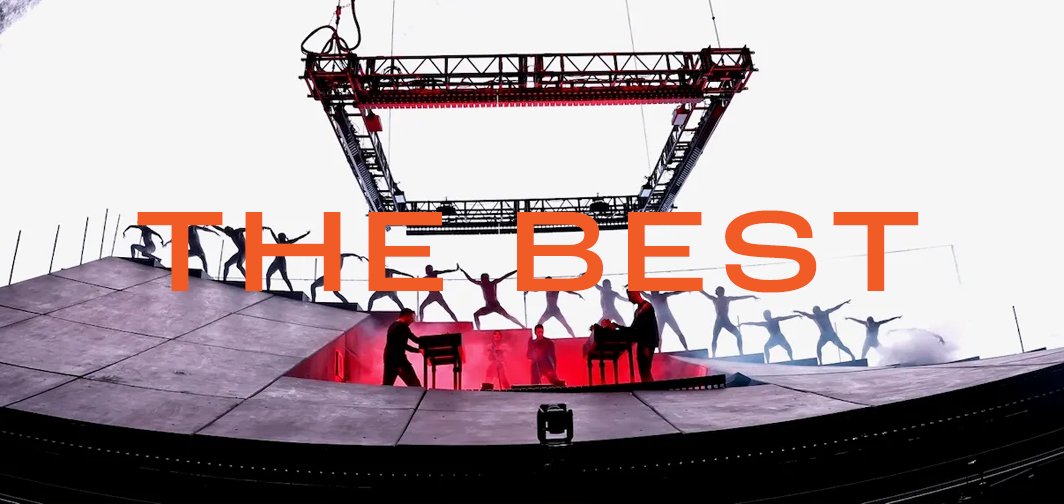
Theater won the weekend. There have been a lot of complaints online about how festival sets, particularly at Coachella, are now more often geared towards the live-stream than they are to those at the festival. This year, Nine Inch Noize, FKA twigs and David Byrne defied that and came to perform.
At the top of the list is Nine Inch Noize, a collaboration between Nine Inch Nails and Boys Noize, who are releasing a new album together on Friday. The show, as expected by anyone familiar with Trent Reznor’s work, was industrial, hypnotic and choreographed to perfection. With an ensemble troupe of 15, the NIN show showcased an apocalyptic scene with the band at the center under a lighting rig which mimicked an MRI machine that enclosed the band within the bounds of its light. As Trent wailed, “God is dead and no one cares,” the dancers crawled across the stage and Boys Noize unleashed violent synthesizers onto the packed Sahara Tent. By the time the band came around to playing the classic “Closer,” there was a feral energy all around us. Boys Noize’s production amplified Trent’s songwriting and vocal talents to create a fully immersive experience that felt like something from a Denis Villeneuve film. For 45 minutes, we were in the real end times with Nine Inch Noize and it’s the kind of show you can only expect to see at Coachella. In fact, Coachella is the only current formal booking for Nine Inch Noize, making it a unique must-see show for anyone attending this coming weekend.
Later that same night, a different kind of theater was taking place across the field. For the second time in less than a decade, David Byrne graced Coachella with a live show. For those unfamiliar with the former Talking Heads leader, know a David Byrne concert is theater, in every sense of the word. Byrne’s been creating unique stage experiences ever since releasing the greatest concert film of all time, Stop Making Sense, and even found his way onto Broadway with his last tour. On Saturday night at Coachella, wearing inmate-orange colored attire, Byrne and his crew turned the Outdoor Theater into a smaller stage using three enormous LED screens built to create a three sided box for the performance to take place inside of. Nearly 70% of Byrne’s set was Talking Heads songs, with cuts like “Psycho Killer” warranting full sprints into the pit from attendees who were hundreds of yards away from the stage. Towards the end of his set, Byrne played “Life During Wartime,” and the LED box showcased a montage of anti-ICE protests from across the country. The moment was met with one of the loudest cheers of the weekend. By the time he started his next song, “Once In A Lifetime,” many around me were near tears. I was sobbing.
As the festival creeped closer and closer to an end on Sunday night, it felt like every queer person at Coachella was in the Mojave Tent awaiting FKA twigs. After cancelling last year’s set, twigs knew she had something to prove and the Coachella crowd was ready to meet her in the moment. The second the performance began, I knew it was going to be the kind of performance you’d talk about for many Coachellas to come. With a crew of dancers in gender-neutral bodysuits and red hair to match twigs, an elaborate set that featured two stripper poles, and lighting design to rival any Broadway show, FKA twigs’ show was one of the greatest celebrations of queerness and community ever seen at Coachella. Around halfway through the performance, there was a voguing segment that featured Honey Balenciaga amongst other prominent voguers from across the country. For five minutes, the Mojave Tent was a ballroom and the entire audience was transported away from the Polo Fields and into a queer space built around safety, community and creativity. To say there was nothing else like it at Coachella, either this year and any year before, is a profound understatement.
Coachella still matters. As of today, weekend two resale tickets are going for thousands over face value. The festival grosses over $115 million in ticket sales alone, with total revenue exceeding $200 million annually. That's a seven-fold profit increase since my first Coachella in 2007. People are not being dragged here. They are choosing it, paying for it, and showing up for it. Sixty-six miles of walking, five slices of Spicy Pie, and some of the best shows I have ever seen in my life. Stop hating. Get yourself to the desert.