The Drama Club: April 2026
This month in The Drama Club: the legacy of Thomas Bangalter, Apple TV’s OnlyFans comedy, thirty piano house songs for spring, and the NBA’s technical foul problem. Let's go →

Each month, I am sharing a playlist. You can read about the playlist and then find streaming links below. If you use a streaming service that you do not see below, please reach out and I will create links for your streamer for choice.
It is officially spring. In my mind, each new season comes with a new soundscape. Spring has always been categorized into two different instruments in my mind: violins and pianos. The violin sounds mostly swirl back to Max Richter’s interpretation of Vivaldi’s “Spring I,” which is my favorite piece of orchestral music. The piano sounds, however, are definitive of an entire subgenre which is the centerpiece of this month’s playlist.
Healing is simply a playlist of piano house songs. My friend Emily often refers to music that you’ll find on this playlist as, “arms out, head back.” That is apt because here are 30 sounds clocking in just under 2 hours that are meant to have you dancing until you’re simply feeling better. You’ll hear a lot of remixes here, of course. One of my favorite remixes of all time, Cyril Hahn’s remix of HAIM’s “Don’t Save Me” opens the playlist. I remember DJing in 2019 and playing that song during the first stretch of my set. By the three minute mark of the remix, a friend of a friend came to the booth and told me, “Hey, this is pretty emo… Don’t get me wrong – it’s amazing – but, wow, are you okay?” I laughed and said, “I’m not okay but this song makes me feel better. Thanks for asking.” I think he understood. Like any good gay, he leaned across the DJ equipment, kissed me on the cheek and said, “You’re killing it, babe.”
Around 30 minutes after the HAIM remix ends, you’ll hear the lyrics, “I've loved, I've lost, and loved again / But here I am, here I stand / Another lesson learned.” The hook of Clare Maguire’s “Elizabeth Tayler” is at the core of what the playlist is trying to accomplish. It’s to know everything is going to be okay, spring is here, just keep dancing.
Stream Healing on Apple Music / Soundcloud / Spotify
Each month, I recommend two movies: one you can watch at home and one you should head out to the theater for. At the end of this section, you’ll find a list of some releases coming this month.
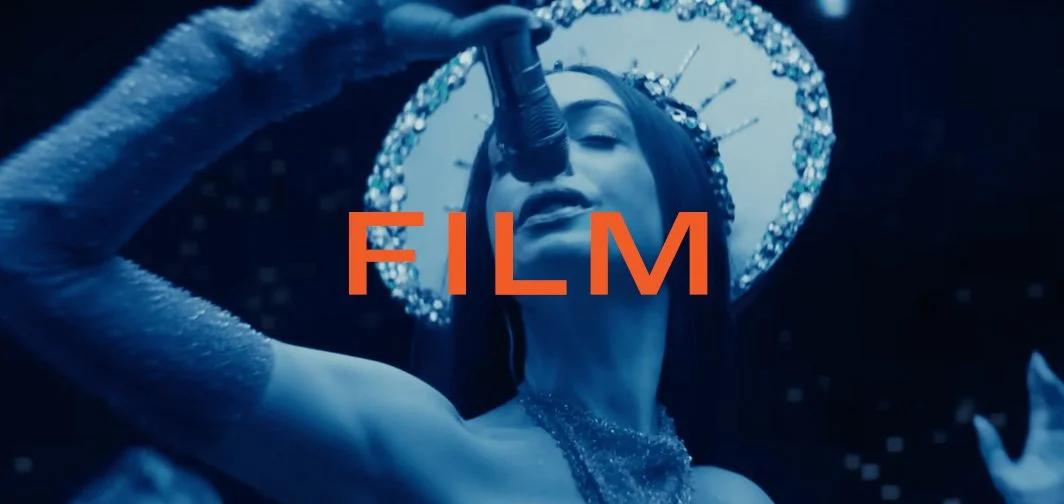
There’s a strange little lexicon of thriller/horror movies focused on female popstars. Maybe you are a part of that online hive that won’t shut up about Vox Lux. Maybe, like me, you couldn’t shut up about Smile 2. Maybe you enjoyed Trap more than you thought you would. Well, now, we’re adding Mother Mary into the mix. The film, which arrives in theaters next week, follows the psychosexual affair between a pop singer and her estranged fashion designer after the singer asks for a dress for her new tour. The title role, which was modeled after Lady Gaga, is played by Anne Hathaway and the designer is played by Michaela Cole. Now, for the really interesting part: the music for Mother Mary, which will be utilized as the music of the title character, has been written and produced by Charli xcx, FKA Twigs and Jack Antonoff. Hathaway is singing the songs (she sounds great, actually) and the film’s lead single “Burial” easily sounds like it could’ve come from one of many of Lady Gaga’s pop daughters. The second single? It’s even better. Get into it and see Mother Mary when it comes to theaters on April 17.
There has come a point every year since the release of Fire of Love that I have come back for another viewing. The 2022 documentary that follows French volcanologists Katia and Maurice Krafft is one of the most visually captivating documentaries of the decade. The footage of the volcanoes from the Krafft’s is absolutely astounding every time I come back for a repeat viewing. The film, which is quick to tell you how the Krafft’s tragically died during a volcanic eruption, is narrated by Miranda July and was nominated for the Academy Award for Best Documentary Feature. If you like nature documentaries or documentaries about unlikely couples who truly seem to be twin flames, Fire of Love should be on your watch list immediately. The film is streaming on Hulu and, best part, it’s only 93 minutes long.
More April Movies To Be Ready For:
The Drama (Out Now)
Changing Lanes (April 16)
Blue Heron (April 17)
Erupcja (April 17)
Each month, I recommend two pieces of music: something new and something I have recently returned to. At the end of this section, you’ll find a list of some releases coming this month.
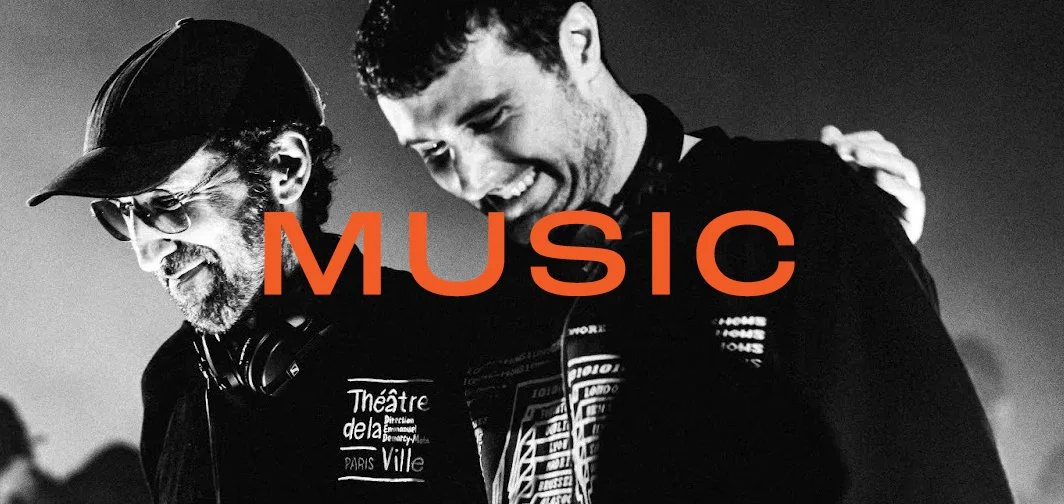
This weekend is Coachella. Nearly every year at Coachella, there is one act that comes out as the next big thing in music. Four years ago, it was Fred again.., the British producer and Brian Eno protegé who has spent the time since his Mojave Tent breakout set putting out an endless stream of dance music that ranges from beautifully emotional to shockingly sweaty, all the while maintaining his charm. Earlier this year, he performed ten shows in New York and London as a part of his USB Tour. For the final show, on February 27, Fred was joined by a surprise guest: dance music legend Thomas Bangalter. Nineteen years ago, Bangalter’s former band Daft Punk changed the entire landscape of live dance music when they performed at Coachella. Now, a recording of Fred and Bangalter’s show from February has been released on Apple Music (look, even more evidence for you to get off Spotify!). The set begins with a mashup of Daft Punk’s “One More Time,” Fred again..’s “Marea (we’ve lost dancing)” and Marvin Gaye’s “Ain’t No Mountain High Enough,” which really showcases the kind of euphoria you’re signing up for as you embark on the 2-hour set. Yes, read that back: “One More Time” x “Marea (we’ve lost dancing) x “Ain’t No Mountain High Enough.” Trust me, it’s even better than you can even imagine. Nearly 100 minutes later, when Bangalter drops his remix of “Signatude” (one of the best remixes of all time), you’ll have already experienced more Daft Punk songs you ever thought you’d hear in a 2026 DJ set alongside bangers from Animal Collective, Caribou, Usher, Gil Scott-Heron, and Prince. And then, the two DJs manage to blend Fred’s “Delilah (pull me out of this)” and Daft Punk’s “Around The World” to create one of the most undeniably perfect dance music moments in modern memory. This is only topped by another drop of “One More Time,” which closes out the set. It is perfect. No notes. Dance music history. Can you tell this set has had a profound effect on me? Can you believe Thomas Bangalter is even back on stage DJing again? Can you bring the euphoria you experience while listening to this set into your daily life? That’s what I’m doing this month.
“Last night, I had a wet dream about the perfect song.” So goes the opening lyric of the lead single from underscores’ phenomenal new album U, which came out a few weeks ago. Usually I write about older music in the back half of this section, but I can’t simply skip over U. Music think-tank member and dear friend Karsten wrote about U for his monthly newsletter and argues that most hyperpop artists prioritize sonic novelty over actual songwriting, whereas underscores (real name April Harper Grey) manages to truly flip that. I agree with Karsten that Grey is first and foremost a pop craftsperson thinking at a level most artists in the genre simply are not. Hyperpop is a genre so often reserved for internet obsessives, queerdos, and music snobs with newsletters. underscores is managing to take it wider by giving us just enough nostalgia and earworm hooks to keep the average listener engaged when they usually would ask to turn down the odd flourishes of a hyperpop song. At the core of my understanding of U are two songs that each navigate the legacy of alt-pop icon Imogen Heap in ways that can invite new listeners into the genre. The first is "The Peace," which has the kind of intro that could stop anyone mid-sentence. Then comes Grey's flow, which somehow lives in the crevices of Taylor Swift's reputation deep cuts. And then it just builds and builds and crashes into itself and then builds some more. It's the kind of song that makes you feel like you're in a tornado, similar to a lot of Imogen's classics. But where "The Peace" pulls you into the storm, my favorite track "Lovefield" tries to hold you still inside it. This is what I imagined it was going to sound like when Ariana Grande said she was going to make music inspired by Imogen Heap. It's reserved, intimate, and very Cancer Sun. Unlike any Imogen-inspired Ariana song, "Lovefield" does not have to play by the conventional pop rules a global superstar like Grande would. So by the time the beat drops around two and a half minutes in, it's a noisy, autotuned, cathartic release. I remember shaking my head when I first heard it. I thought to myself, "This is what pop music can sound like." The success of U should make everyone question why more of it doesn't.
More April Albums To Be Ready For:
Jessie Ware - Superbloom (April 10)
WU LYF - A Wave That Will Never Break (April 10)
Tomora - Come Closer (April 17)
Kehlani - Kehlani (April 24)
Noah Kahan - The Great Divide (April 24)
Each month, I recommend two pieces of television, which means less and less these days but for our purposes, television means anything you can stream that isn’t structured as a film. At the end of this section, you’ll find a list of some releases coming this month.
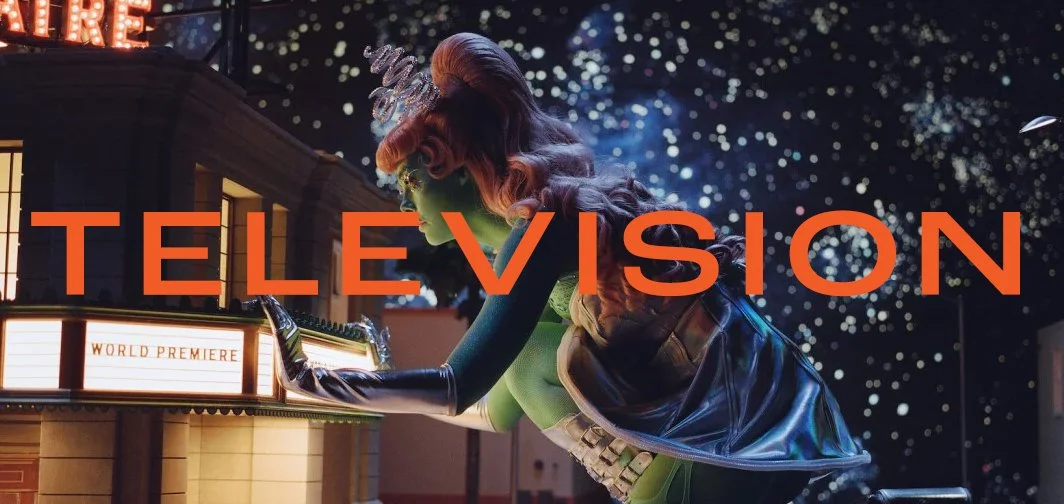
In the middle of the month, Apple TV is premiering Margo’s Got Money Troubles, the new series from TV icon David E. Kelly (Big Little Lies, Ally McBeal). First and foremost, if you haven’t read Rufi Thorpe’s novel which the show is based on, order it today. It had me laughing outloud, cursing characters out and feeling a lot of emotions within just a handful of pages. The show revolves around Margo (played by Elle Fanning), a young college student who finds herself a young mother who needs to make a lot of money quickly to support herself and her newborn. Enter stage left: OnlyFans. And while the show has Margo’s name in the title and Elle Fanning is destined to garner a lot of praise for her work, it is without a doubt Michelle Pfeiffer who will be receiving the most praise for her work as Margo’s mother Shayanne. In the novel, Shayanne is already quite a scene-stealer. With Pfeiffer (working with her husband, Kelly, for the first time) in the role, it will only be big laughs from the very beginning. Alongside Pfeiffer is Nick Offerman, who plays Margo’s father and retired pro-wrestler Jinx. So if you’re into OnlyFans or young motherhood or opening credits set to Robyn or WWE or off-beat comedies from one of the best teams in television, Margo’s Got Money Troubles should be on your watch list when it hits Apple TV on April 15.
Whenever I see a new Dan Levy project, I have to ask myself if it’s something I could see myself in. Enough people have told me I am David from Schitt’s Creek that it’s just a reflex at this point. And let me tell you, I would have loved to be in Big Mistakes. The show, which comes to Netflix on Friday, follows two siblings who are blackmailed into the world of underground crime after a misguided theft involving their dying grandmother. Oh, and Levy’s character is a gay pastor. Because, well, the show was created by Levy and equally insane but remarkably successful LA starlet Rachel Sennott. Look, the show appears to be insanely dysfunctional and laugh-out-loud funny, which is really all we can ask for from Netflix at this point. Maybe Big Mistakes is the version of Knives Out we actually deserved last year. Or maybe it’s going to be a spotty but passably funny ridiculous mess like Sennott’s I Love LA. Either way, you’ll have to tell me if this is a character you could see me play.
More April TV To Be Ready For:
The Boys - Amazon Prime (April 8)
The Testaments - Hulu (April 8)
Hacks - HBO (April 9)
Euphoria - HBO (April 12)
Beef - Netflix (April 16)
This Is A Gardening Show - Netflix (April 22)
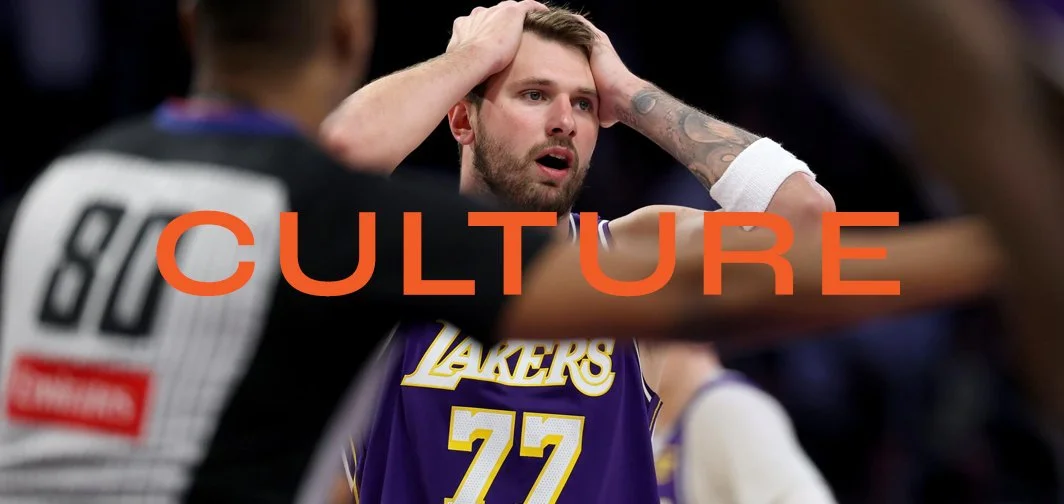
Each month, I dig into one cultural topic that feels unavoidable. Sometimes it’s a moment, sometimes it’s a movement, and sometimes it’s just a question I can’t stop thinking about.
There is a rule in the NBA that says if you accumulate 16 technical fouls in a regular season, you get suspended for a game. This year, Dillon Brooks hit 16 before the All-Star break. He is also somehow still employed as a basketball player, which says everything you need to know about where the Suns are right now.
Technical fouls are one of my favorite things in sports because they are, at their core, a penalty for having feelings. You cannot touch anyone. You cannot throw anything. You simply have to stand there and feel nothing. The NBA has been trying to regulate human emotion since 2006, when commissioner David Stern introduced what the league called a behavior crackdown. Pull your jersey over your head after a bad call: tech. Throw your hands up like you have never witnessed such cosmic injustice: tech. Keep talking to a referee a full minute after the whistle: tech. The league's official position on the correct player mindset was, and I am not making this up, "abstinence."
Nearly twenty years later, Luka Doncic has 13 technicals this season, Draymond Green has 11, and Isaiah Stewart has 12 plus a separate seven-game suspension for a fight. The crackdown is working great.
But here is the real problem: the technical foul epidemic is a symptom, not the disease. The disease is that the NBA has quietly transformed into a league that is more interested in managing assets than playing basketball. Teams tank to get draft picks. Stars sit out back-to-backs. LeBron plays one night and is listed as questionable the next because his hamstring experienced emotional fatigue. And then when someone like Draymond actually shows up and cares enough to lose their mind about a call, the league fines them for it.
The most maddening part is that the basketball itself is phenomenal. This might be the most entertaining NBA season in a decade. I am tuning into games that have no impact on my team because nearly every night there is something worth watching. Basketball is an ego sport, and right now we are getting the sports equivalent of the Met Gala at least once a week. And yet every time the game hits its peak, a referee stops play to spend four minutes reviewing a call that will not change, or a star gets suspended for feeling something too loudly, or you check the injury report and realize the guy you came to watch is sitting because his knee is "sore." The modern NBA sold us on player empowerment. Turns out players took that seriously and decided they get to choose when the product is worth their full effort. One outcome is load management. The other is a technical foul. Both are the league eating itself. The Stern-era crackdown was designed to protect the integrity of the game.
What is protecting it now?