The Drama Club: January 2026
This month in The Drama Club: a tender slice-of-life film up against an anxiety-soaked table tennis fever dream, Sade on repeat exactly as intended, unfiltered takes on HBO’s splashiest shows as they hit our screens, and the case for LA’s largest annual art festival. Let’s go →
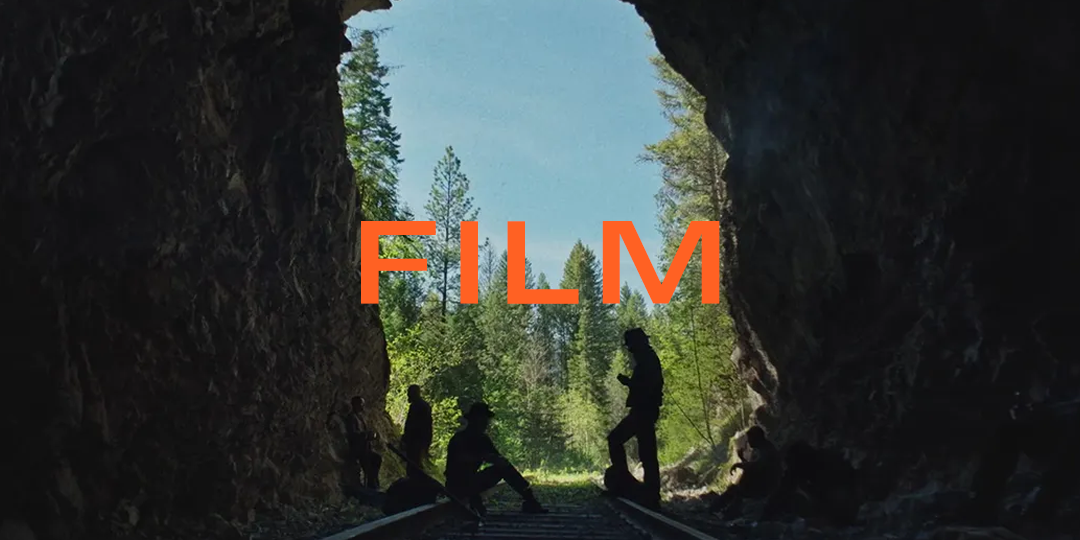
Each month, I recommend two movies: one you can watch at home and one you should head out to the theater for. At the end of this section, you’ll find a list of some releases coming this month.
This month, we start at home. Ultimately, it’s unfortunate you cannot see Train Dreams in theaters, as the cinematography is the year’s very best. Over 90 minutes, director Clint Bentley tells the entire life story of a wood logger in the 19th century Pacific Northwest from birth to death. It is an absolutely stunning portrait of a life, anchored by a nuanced performance by Joel Edgerton and Adolpho Veloso’s cinematography. Veloso shot the film digitally, but still manages to create the type of lush and perfectly saturated images that could trick even the biggest cinephiles amongst us. I find myself often returning to stills from the film to just take in how beautiful it looks.
Music by Bryce Dessner of The National does an excellent job here of working to deepen the film’s motifs and emotions without ever taking centerstage. Dessner’s restraint is symptomatic of Train Dreams’ desire to highlight delicacy, the natural world and humanity rather than pomp and circumstance. Everything here is working together in a graceful harmony and the result is my favorite film of 2025. The film is streaming now on Netflix.
As for what to see in theaters, my answer is fairly straightforward. Put aside whatever feelings you may have about its nagging and often overzealous promotional campaign and see Marty Supreme. Josh Safdie is our modern master of tense filmmaking (I still remember hearing someone scream in the theater when Adam Sandler’s character was killed in Uncut Gems) and Marty Supreme is unrelentingly stressful in the most delectable way.
With some of the year’s best performances (why aren’t more people talking about Gwyneth Paltrow’s perfect performance here?) and a genuinely exciting story of a table-tennis player looking to be the best in the world just as the sport takes off in the 50s, Marty Supreme is the kind of movie that both critics and those who hate movies critics love can agree is nearly perfect. Timothée Chalamet (who just won the Critics’ Choice Award last night) is as good as he says he is in this and earns every bit of ego he has been putting on display over the past few months.
On the big screen, the film’s table-tennis scenes are such invigorating moments of tension and pleasure, with Chalamet at the center of nearly every one. His chemistry with O’Leary, Paltrow, love interest Odessa A'zion, and a charming, if slightly over the top, Tyler, The Creator makes the movie feel like an ensemble piece when really this easily could’ve just been a one-man show. Marty Supreme is more than just a Chalamet vehicle. It’s a damn good time.
More January Movies To Be Ready For:
Peter Hujar’s Day (January 6 - VOD)
The Chronology of Water (January 9)
Dead Man’s Wire (January 9)
The Moment (January 30)
Send Help (January 30)

Each month, I recommend two pieces of music: something new and something I have recently returned to. At the end of this section, you’ll find a list of some releases coming this month.
This Friday, Dry Cleaning is releasing their third studio album, Secret Love. I’m not going to pretend Dry Cleaning is a band you’ll hear on the radio, in the club, or even reliably served to you by an algorithm. The band is led by Florence Shaw, who sings as if she’s perpetually unimpressed by everything life has ever shown her. It’s completely singular, and she never wavers.
When I first heard “Scratchcard Lanyard” in 2021, I was immediately hooked on her tenor and the band’s crunchy soundscape. With Secret Love, the band has already released a handful of songs, the best of which are the six-minute-long lead single “Hit My Head All Day” and stunner “Let Me Grow and You’ll See the Fruit”. Dry Cleaning are really good at surprising you with how affective their music can be and “Hit My Head All Day” is the perfect example. At first it reads as a sort of ’80s-tinged dystopian psych groove before unfurling into a feverish meditation on manipulation through misinformation. As Shaw recounts strange childhood memories and repeats the song’s title, the band’s textures slowly work their way under your skin like an interrogation. It’s absolutely thrilling.
Every year, I identify artists with deep discographies I want to spend real time with. In 2025, that list included Janet Jackson and ABBA. The year before, it was Prince, David Bowie, and Dolly Parton. This year, Sade is at the top of my list. I’ve been listening to the English band constantly over the last few days and have been completely enamored with their 1988 album Stronger Than Pride.
Every time I hear the drums on “Paradise,” I leave my body. As she sings, “Ooh, what a life,” I’m completely entranced. It’s infectious. I know for many, Love Deluxe is considered pinnacle Sade, but with Stronger Than Pride, the band is making much braver choices. “Haunt Me” is a kind of anti-Sade song in that it lets memory occupy the space where the pain is and never releases it. “I Never Thought I’d See the Day” is an absolute showstopper, its soaring vocals and stirring string and saxophone arrangements so overwhelming that Sade doesn’t even need to sing on the song that follows.
It’s no surprise that Stronger Than Pride was the band’s first self-produced album because it sounds completely autonomous. The result is Sade trusting confidence and restraint to create a record that feels richer every time it plays. If you’re even remotely curious about Sade beyond the obvious, go listen to Stronger Than Pride immediately.
More January Albums To Be Ready For:
Zach Bryan - With Heaven on Top (January 9)
A$AP Rocky - Don’t Be Dumb (January 16)
Julianna Barwick & Mary Lattimore - Tragic Magic (January 16)
Madison Beer - locket (January 16)
Sébastien Tellier - Kiss The Beast (January 30)
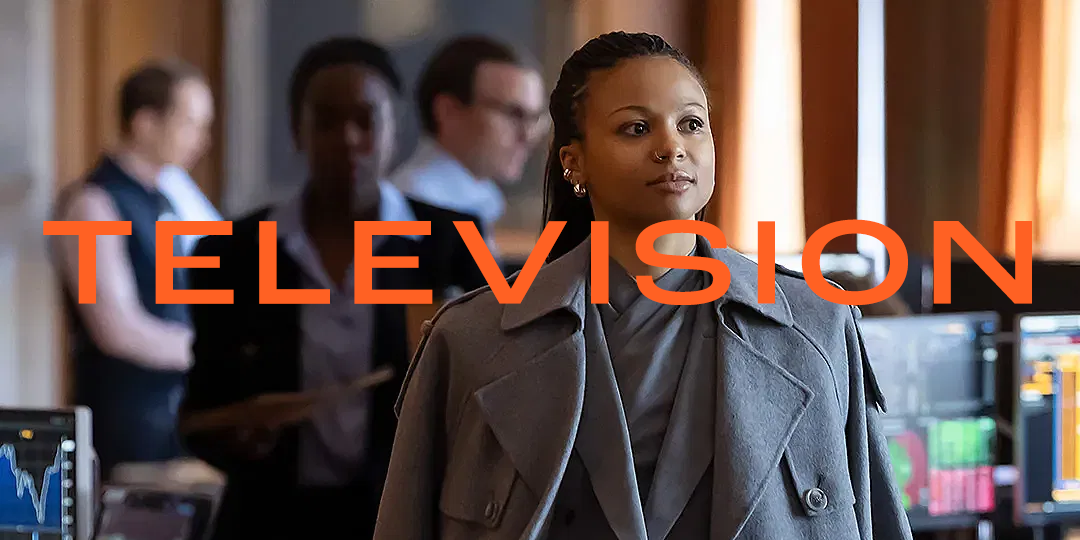
Each month, I recommend two pieces of television, which means less and less these days but for our purposes, television means anything you can stream that isn’t structured as a film. At the end of this section, you’ll find a list of some releases coming this month.
It’s not TV, okay? It’s HBO. And this month, HBO has a lot going on.
Of course, there’s The Pitt, which returns this week for its second season. I can’t quite endorse The Pitt because, honestly, I couldn’t make it through even the second episode of the first season. That’s not to say it’s bad, just that it’s probably not my kind of hospital show. The Pitt is desperately stressful, unsexy, and almost completely devoid of music. This is, objectively, not for me.
Thankfully, HBO is following it up with something much sexier: the return of Industry. When Industry first showed up, it felt like a show trying to ride the “rich people doing bad things” wave set in motion by Succession. Thankfully, it quickly revealed itself to be about far more than that. Yes, rich people do bad things on this show, but they also do a lot of questioning and unlearning. Industry is led by two powerhouse actresses and their characters are unafraid to ask questions about why they have to answer to men so often. Last season, the show focused heavily on those women’s family trauma, which paired beautifully with the Industry’s most common theme: the tension between personal morality and unwavering capitalism. If you like your television witty, messy, and a little dangerous, now is a very good time to catch up on Industry before season four premieres on January 11.
And then, of course, HBO is taking us back to Westeros. I will be honest, House of the Dragon is just fine. Emma D’Arcy and Olivia Cooke are doing excellent work, but that show just has never lit the spark the way the original Game of Thrones once did. Armies of dragons do not a good story make!
That said, I’m still willing to give A Knight of the Seven Kingdoms a chance when it premieres in a few weeks. What strikes me most about this trip to Westeros is how much humor is highlighted in all the show’s promotional materials. It’s a reminder of how fun Game of Thrones really was before to it’s final descent into disappointment. It remains to be seen if the humor works, but the apparent lack of dragons or magic may allow A Knight of the Seven Kingdoms to do what Game of Thrones once did so well: build multidimensional characters we can care about and, occasionally, root for as genuinely good people. That should start to become clear when the show premieres on January 18.
More January TV To Be Ready For:
The Traitors - Peacock (January 8)
Tell Me Lies - Hulu (January 13)
Queer Eye - Netflix (January 21)
Memory of a Killer - Fox (January 25)
Shrinking - Apple TV (January 28)
Bridgerton - Netflix (January 29)
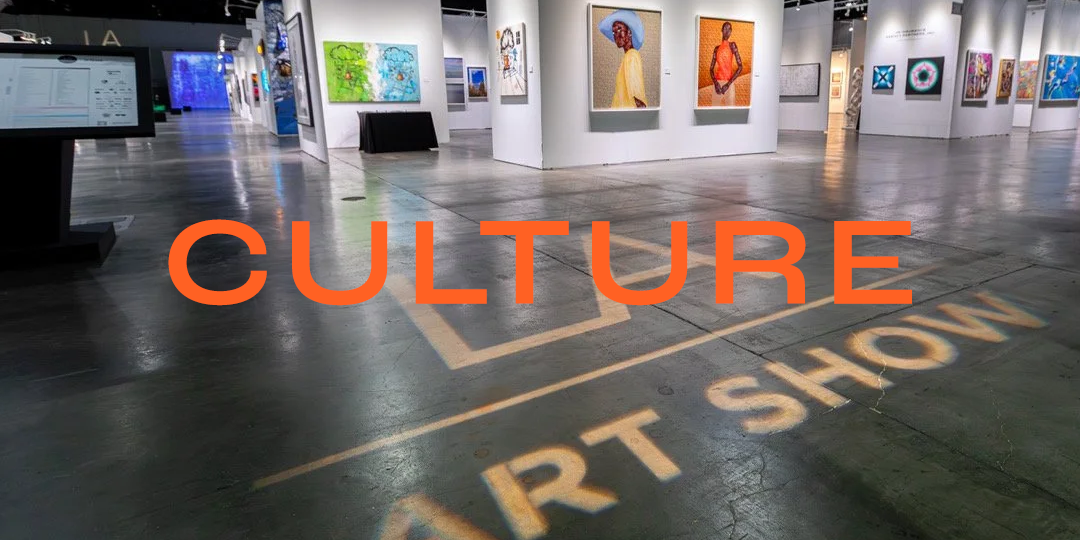
Each month, I dig into one cultural topic that feels unavoidable. Sometimes it’s a moment, sometimes it’s a movement, and sometimes it’s just a question I can’t stop thinking about.
Later this week, the Los Angeles Convention Center becomes home to the LA Art Show. First launched in 1995, it is the longest-running art fair in the city and, year after year, remains the most comprehensive on the West Coast. This year is no exception. When the fair opens on Wednesday, it will host more than 90 galleries and cultural organizations from Europe, Asia, Africa, and the Americas, including its first-ever gallery from Ireland. The scale is ambitious, the scope international, and the intent unmistakably broad. It is a show you go to discover something.
Anyone paying even casual attention to art knows that Los Angeles has become saturated with art fairs over the last decade. Frieze arrived in 2019 with a cinematic takeover of the Paramount backlot. That same year, Felix Art Fair began its now-annual transformation of the Roosevelt Hotel into a gallery-filled social labyrinth. Startup Art Fair Los Angeles followed a similar model, overtaking a Venice hotel for a long weekend. These fairs have become fixtures. Among friends and colleagues, Frieze in particular has become something of an annual pilgrimage. Each year there are a handful of genuinely arresting works, but what tends to linger most are the encounters. Who you saw. Who you met. The dinners, the long conversations, the quick hugs in the aisles, the sense of being present at the right place at the right time. It is a see-and-be-seen experience that mirrors the art world itself.
Each time I return to the LA Art Show, I’m struck by how little anyone there is telling me what I’m supposed to think is important or cool. In the art world, perhaps more than in any other creative field, value is often decided socially before it is decided critically. Taste is signaled through proximity. Importance is implied by placement. People tell you what matters by clustering around the same artists and speaking in shorthand about the next big thing everyone is meant to know.
At the LA Art Show, that dynamic largely falls away. No one is steering you toward the right booth or the sanctioned moment. The fair doesn’t tell you what matters. It trusts you to look, to linger, and to decide for yourself.
As the art world continues to consolidate around fewer fairs and louder signals, spaces like this become rarer. Art will likely never be fully democratized, but it can be made less exclusionary. It can be less about access to the right room and more about personal connection. In a global art world increasingly optimized for prestige, proximity, and permission, the LA Art Show matters not because it tells us what’s important, but because it trusts us to decide for ourselves.